About Us
The Institute of Public Opinion and Research (IPOR) is a research organisation that specializes in surveys and Social Science research, advisory and consulting services based in the University Town of Zomba in southern Malawi. We are a leading research organisation in conducting and presenting high quality and trusted data to our clients in opinion surveys, marketing research, advisory and consulting services. Founded in 2014, IPOR is a partnership between two scholars based at Chancellor College, University of Malawi. IPOR is a legally registered organisation by Malawi Government under the Business Names Registration Act (Cap.46:02). It was legally registered on 10 November 2014 to operate in Malawi. IPOR operates from its physical offices at 4 Miles, Off M3 Road, Next to Zipatso, Zomba

Our Mission
To offer high quality advisory services and conduct excellent and independent research designed to produce new knowledge and transformative insights as the basis for innovative and practical policy interventions that promote the well-being of societies, especially in the developing world.
Recent News
Citizen perspectives and experiences participating in the 2025 elections - Policy Brief
Posted on Mar 04, 2026 at 09:23
This brief presents citizens’ perspectives and experiences across key stages of the electoral process, including voter registration, election campaigns, voting, and the announcement of final results. The analysis draws on two nationally representative pre-election surveys conducted by the Institute for Public Opinion Research (IPOR) in July and August 2025 with 2,400 adult Malawians each, complemented by a postelection telephone survey of 305 consenting respondents from the pre-election samples to capture voters’ experiences and perceptions after the elections
The findings indicate high levels of citizen participation and generally positive experiences throughout the electoral process. A large majority of adult Malawians reported being registered to vote, with most finding the registration process straightforward. Citizen engagement during the campaign period was also notably strong; over half of eligible voters attended political rallies, and nearly 70% closely followed the campaign. Participation and interest were higher among men and older adults compared to women and youth. Importantly, fears of political intimidation or violence were lower during the campaign than in the pre-campaign period, suggesting a more peaceful electoral environment than initially expected. The findings also show broad support for using technology to transmit election results, though this support varied by region, residence, and education level, highlighting the need for targeted communication to build trust and understanding around technological innovations in elections.
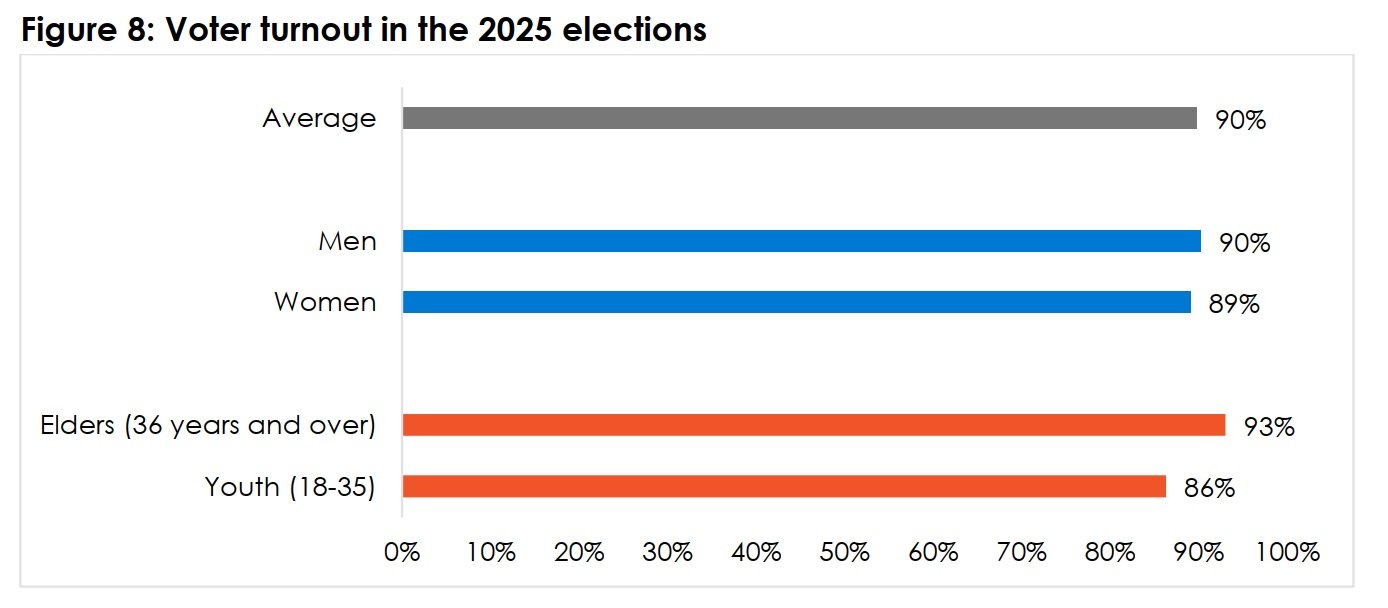
Post-election telephone survey results reveal high voter turnout among participants and largely positive voting experiences. Most voters reported short waiting times and expressed strong confidence in the secrecy of their ballots. Perceptions of electoral integrity were notably high: the vast majority viewed the 2025 elections as free and fair and trusted that the results announced by the Malawi Electoral Commission (MEC) accurately reflected the voters\' will. Assessments of the MEC\'s performance were overwhelmingly positive, particularly regarding security at polling stations and the commission\'s efforts to ensure that citizens could vote without fear or intimidation. However, a notable minority expressed dissatisfaction with the time taken to announce final election results, despite these being released within the legally mandated timeframe.
The findings emphasize the importance of maintaining neutrality in law enforcement, ensuring the impartiality of MEC officials and polling center staff, and intensifying voter education campaigns to uphold free and fair elections
Download the policy brief by clicking View File.
2025 Malawi Pre-election Survey Results Report
Posted on Mar 04, 2026 at 09:19
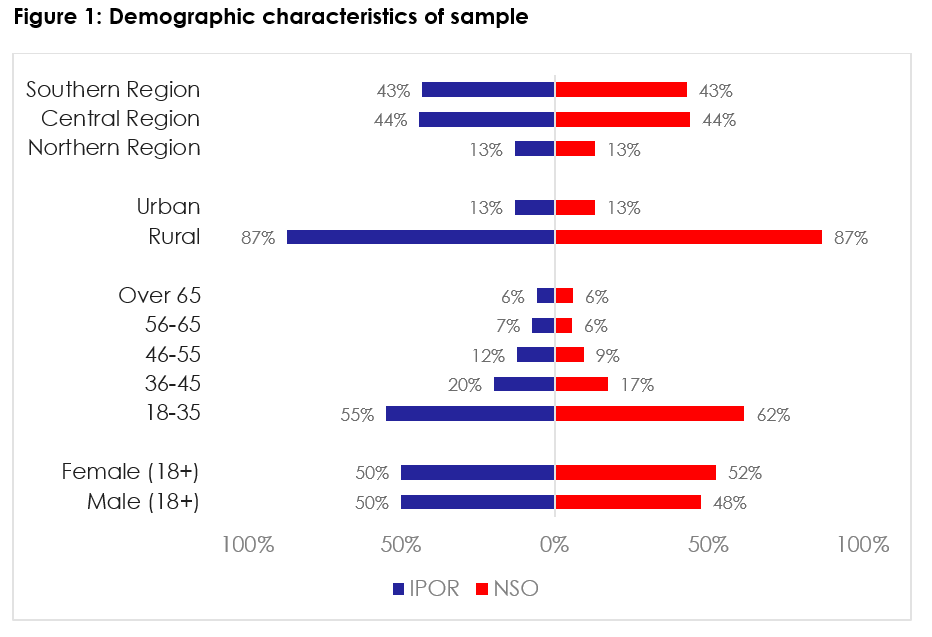
A nationally representative survey of 2,400 adult Malawians was conducted between 14 and 27 August 2025, covering 27 of the country’s 28 districts, excluding Likoma. Respondents were randomly drawn from both rural and urban areas using a multistage stratified sampling design. Enumeration areas (EAs) were randomly selected from the National Statistical Office’s 2018 census list and stratified to reflect the adult population distribution across regions: North (13%), Central (44%), and South (43%). Within each region, 87% of respondents were sampled from rural areas and 13% from urban areas, mirroring Malawi’s population structure. In each EA, enumerators systematically selected households using a 5/10 count interval, and one adult member per household was randomly chosen for interview. This rigorous randomization process ensured that the survey closely reflected Malawi’s demographics and regional distribution, making the findings both reliable and nationally representative within a margin of error of ±2%.
Download the full report by clicking View File below

The Edward Chiwayula Trust Fund
Before his sudden and untimely passing on April 17th, 2016, the late Edward Chiwayula was working as an enumerator on the Governance and Local Development Project, a collaborative venture between IPOR, the Program on Gover...
Our Partners